In the hospital room, Evan was playing with the other children.
He was the oldest in the pediatric ward, and sometimes he carried himself with quiet maturity—but the moment he saw us, his face lit up with innocent joy.
After our parents stepped out to talk with his doctor, I handed him a bag of his favorite milk chocolate M&M’s.
His eyes brightened even more.
He tore the bag open and shared the candies with the other kids before popping a few into his own mouth.
Around me, he always looked like the little brother I used to know.
“How’s the pain in your leg?” I asked.
“It hurts so much. I can’t sleep,” he said. “I screamed a few times last night. The painkillers didn’t work, so I took twice as much.”
His hair was gone, his face thinner than ever.
He tossed a pink M&M high into the air, missed it, and laughed with his tongue out.
When the candy fell onto the bed, I quickly grabbed it and ate it before he could.
“Hey!” he protested, half laughing, half disappointed.
Even something harmless to a healthy person could be dangerous to him.
I couldn’t risk letting him eat anything that had touched the bed.
Maybe I was being overprotective—but I couldn’t help it.
Then he suddenly said, “Oh, that reminds me,” forcing a cheerful smile.
“I talked with the doctor yesterday about what comes next. She said more chemo would only weaken me and shorten my life. She thinks it might be better to switch to palliative care and go home.”
I knew what that meant.
I’d read enough medical sites and books to understand.
Of course I didn’t want to lose him.
During the long months of treatment, Evan had endured nausea, exhaustion, and pain that would break most adults.
To hear that there was nothing left to try—it felt like a door had slammed shut in front of us.
But I couldn’t tell him to keep fighting, not after all he had already suffered.
“Maybe being home will help you relax,” I said quietly.
“No matter what happens, I believe you’ll live. Remember what the doctor said—your mind matters too.”
Evan nodded.
“Yeah. One of my friends from the ward got better after going home. Maybe I will too.”
He smiled to reassure me, and that caused me pain.
He was always like that—too kind, too gentle.
I hated the illness that had stolen his real smile.
“When I get home, let’s play that game again,” he said.
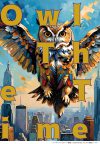
“You’re on,” I said. “And we’ll watch the owl show together too. Hey, did you hear? Oats escaped from Central Park.”
I just wanted to make him happy. It was the first time I had ever lied to him.
“Really?” His eyes sparkled.
I’d meant to tell him it was an April Fool’s joke—but seeing that look on his face, I couldn’t.
Instead, I heard myself say, “Yeah. I saw him on the way here—flying freely over Times Square.”
“That’s so cool!” Evan laughed. “Oats was wild once. He’s stronger than people think. He’ll survive out there—catching mice and bugs with that sharp beak of his.”
“Yeah,” I said softly.
“I’m going to leave this hospital too,” he said, his eyes shining. “I’ll beat this, and I’ll fly—just like Oats.”
“You will,” I told him.
We buumped our fists together.
The lie ached in my chest, but if that lie could give him strength—if it could give him even a little hope to keep fighting—then I was willing to bear it.
More than anything, I wanted someone—anyone—to tell me a lie like that too.
To say that Evan would be saved, that the cancer would disappear completely.
Why did it have to be him?
Why not someone else—someone less kind, less gentle?
Why did this fate choose my little brother, who loved so deeply and asked for so little?
When, I wondered, would he finally be free to fly?